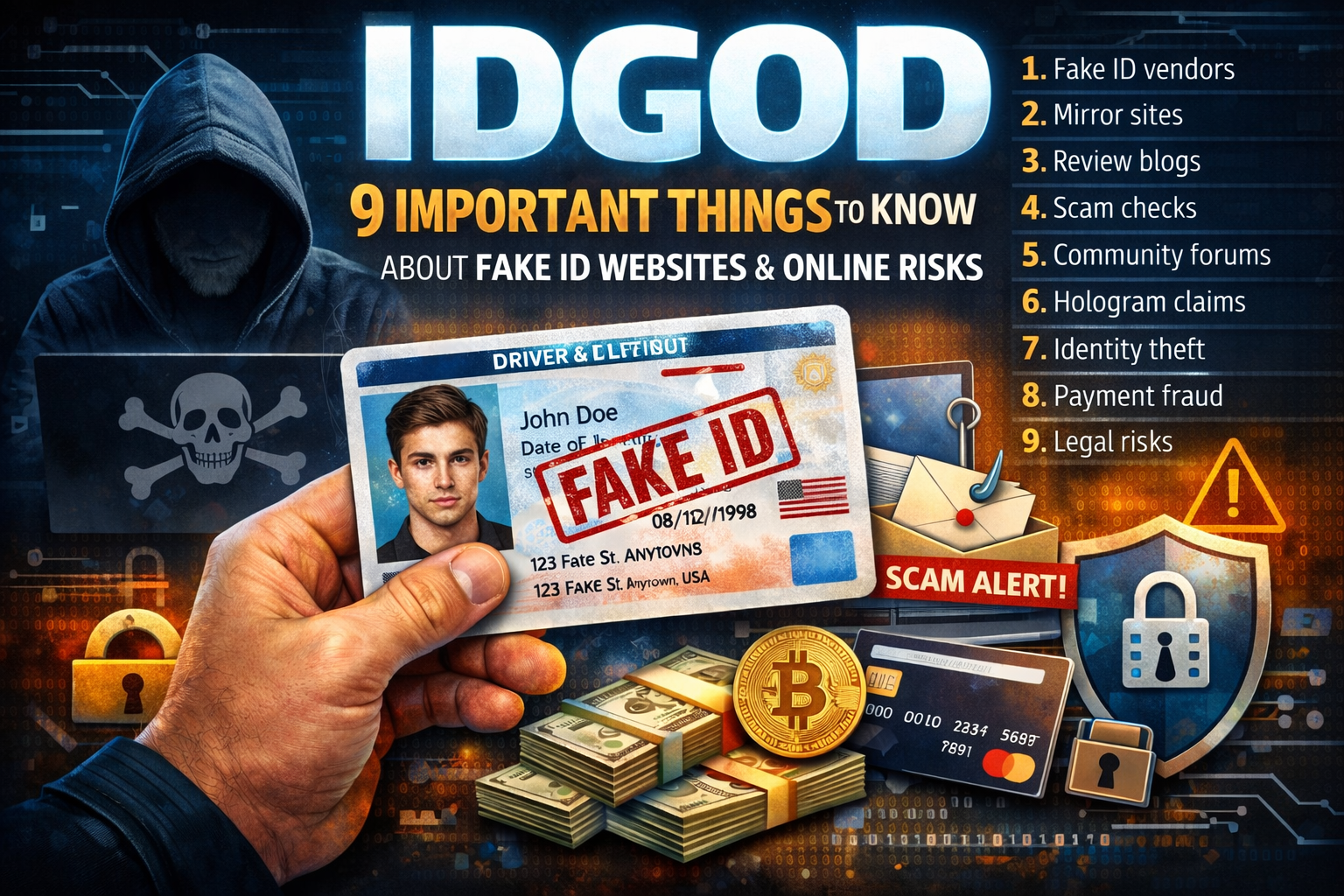
IDGod: 9 Important Things to Know About Fake ID Websites and Online Risks
The internet contains many websites that offer different services. Some websites provide useful tools and information. Others operate in controversial areas that may involve legal or security risks. One keyword that often appears in search engines is IDGod.
Many people search this term because they see it in online discussions or on social media. Some users are curious about what it means. Others want to know whether websites connected with this name are safe or risky.
This article explains the topic in simple words. It describes what IDGod refers to why people search for it and what risks are connected with fake ID websites.
What Is IDGod
IDGod is a name often used by websites that claim to provide fake or novelty identification cards. These websites usually promote identification cards that look similar to official driver licenses or state IDs.
The name appears across many domains and online pages. Because of this it is sometimes difficult to know whether these websites are connected or simply using the same brand name.
Many websites using the name try to attract visitors by showing images of identification cards and by making strong claims about their product quality.
Common claims seen on these websites include
- Real looking ID design
- Barcode scanning feature
- Hologram security marks
- Plastic card material
- Different state ID templates
These claims are usually used as marketing messages.
Why The Keyword IDGod Is Popular
Search engines show many results for this keyword because people often search it out of curiosity or concern.
Several reasons explain why the term has become popular online.
Curiosity
Many users first see the name in a forum or online conversation. They search the term to understand what it means.
Online Communities
Internet forums and discussion platforms sometimes talk about fake ID websites. These discussions increase search activity.
Scam Research
Some people search the keyword because they want to know if certain websites are trustworthy.
News and Media
Occasionally news stories talk about counterfeit ID networks. When this happens people search related terms to learn more.
Types of Websites Connected With the Keyword
When someone searches IDGod they may see different types of websites. Each type has a different purpose.
Vendor Style Websites
These websites claim to sell novelty identification cards. They usually include product images and order instructions.
Typical sections include
- Product description
- Pricing details
- Delivery information
- Customer testimonials
- Frequently asked questions
The goal of these websites is to attract potential buyers.
Mirror Websites
Mirror websites are copies of other sites. They may use similar text images and branding but operate under a different domain.
Operators sometimes create mirror sites when older domains stop working.
Review Blogs
Some blogs write reviews about fake ID websites. These posts discuss whether the site appears reliable or risky.
Review articles often discuss
- Product claims
- Delivery time
- User feedback
- Website reputation
Scam Detection Websites
Some platforms focus on website safety analysis. These websites examine whether a domain may be suspicious.
They usually check
- Domain age
- Security status
- Website traffic
- User reports
Discussion Forums
Community forums also appear in search results. Users share personal experiences and opinions about certain websites.
Common Claims Made By Fake ID Websites
Fake ID vendor pages often advertise many features. The table below shows typical claims seen on these websites.
| Feature | Explanation |
|---|---|
| Hologram design | Visual security image that imitates real IDs |
| Barcode scan | Claim that the barcode works in scanners |
| UV printing | Ink that becomes visible under UV light |
| Plastic material | Card made with strong plastic |
| State designs | Templates that match different states |
These claims are often used to persuade visitors.
Typical Structure of Fake ID Vendor Pages
Many websites connected with fake identification follow a similar layout.
Common sections include
- Homepage introduction
- Product gallery
- List of available ID types
- Pricing page
- Order instructions
- Shipping information
- Customer reviews
- FAQ section
This layout is designed to make the website look like a normal online store.
Legal Issues Connected With Fake Identification
Fake identification is illegal in many countries. Governments treat counterfeit identification documents as a serious offense.
Possible legal consequences may include
- Criminal charges
- Monetary fines
- Confiscation of fake documents
- Legal records that affect future opportunities
Because of these risks authorities often warn people about counterfeit identification services.
Security Risks When Using Unknown Websites
Besides legal concerns there are also cybersecurity risks connected with fake ID websites.
Personal Data Risk
Some websites request personal information such as
- Full name
- Address
- Date of birth
- Personal photograph
Sharing this information with unknown websites can lead to identity theft.
Payment Fraud
Some websites may accept payment but never deliver any product.
Data Misuse
Personal information collected by questionable websites could be used for fraud or sold to other parties.
Why These Websites Still Appear In Search Engines
Despite legal and security concerns many websites connected with this keyword still appear in search results.
Several reasons explain this.
High Search Interest
Many people search the term which increases visibility.
Online Discussions
Forums blogs and social media posts often link to these websites.
New Domains
When one domain disappears another may appear using a similar name.
Curiosity Based Searches
Users often search the keyword simply to understand the topic.
Topics Often Covered In Website Reviews
Review blogs usually analyze several aspects of a fake ID website.
| Review Topic | Purpose |
|---|---|
| Website background | Explains when the domain appeared |
| Product claims | Lists features the site advertises |
| Customer feedback | Shows experiences from users |
| Delivery promises | Examines shipping claims |
| Safety warnings | Explains possible risks |
These reviews help readers understand the website before interacting with it.
Tips For Staying Safe Online
The internet contains many useful resources but it is important to stay cautious.
Follow these safety practices.
Protect Personal Information
Do not share sensitive data with websites you do not trust.
Research Websites Carefully
Look for independent reviews and security reports before making any payment.
Watch For Warning Signs
Be careful if a website
- asks for unusual payment methods
- provides very little contact information
- promises unrealistic results
Use Secure Internet Practices
Keep devices updated and use secure connections when browsing online.
Frequently Asked Questions
What does IDGod mean
IDGod is a keyword associated with websites that claim to sell fake identification cards.
Why do many websites use this name
Some websites use the name because it is widely known in online discussions.
Are fake ID websites legal
In most countries fake identification services are illegal and can lead to serious penalties.
Why do people research this keyword
People search it because of curiosity online discussions and scam investigation.
Conclusion
The keyword IDGod has become well known on the internet over time. It is often linked with websites that claim to provide fake identification cards.
Search results for this keyword usually include vendor pages mirror sites review blogs scam detection platforms and community discussions. Each source presents different information about the topic.
The subject also highlights the importance of online awareness. Fake ID websites may involve legal issues financial scams and privacy risks.
Anyone researching unfamiliar services online should stay cautious protect personal information and verify websites carefully. Understanding how these online systems work helps people make safer decisions while using the internet.